01
Ahimsa in Daily Life
Non-violence is not an extraordinary act reserved for saints. It is a practice accessible to every person in every moment — in how we speak, eat, consume, relate, and act in the world.
Read More →Illuminating the path toward inner peace and compassionate action
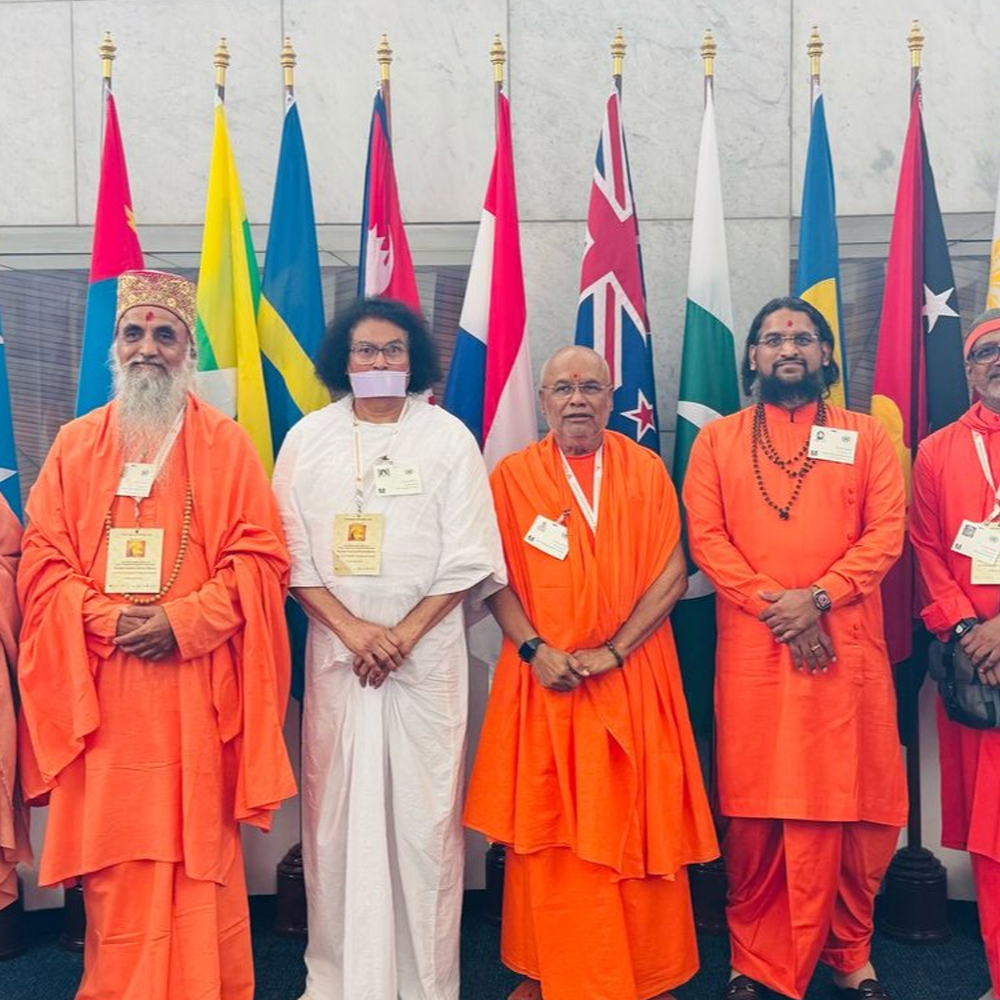
Before we can change the world, we must change ourselves. This is not a retreat from engagement — it is its prerequisite.
Lokesh Muni teaches that all external conflict is a mirror of internal conflict. The violence we see in the world — wars, exploitation, injustice — finds its seed in the unexamined violence of our own minds: our fears, our judgements, our refusal to see the human being behind the other.
The Inner Revolution is not a withdrawal from the world but a more radical engagement with it — beginning from the inside. When a person transforms their inner landscape from one of reaction to one of compassion, everything they touch is transformed.
Non-violence is not an extraordinary act reserved for saints. It is a practice accessible to every person in every moment — in how we speak, eat, consume, relate, and act in the world.
Read More →Understanding karma not as supernatural reward-and-punishment, but as the natural law of cause and effect — the recognition that every action, thought, and word shapes both ourselves and the world around us.
Read More →Forgiveness is not weakness, nor does it require pretending that harm did not occur. It is the act of releasing ourselves from the prison of resentment — and in doing so, opening the door to genuine healing and reconciliation.
Read More →The Jain principle that no single perspective captures the whole of reality. Learning to hold complexity, to honor different experiences, and to engage with genuine curiosity rather than the certainty of closed minds.
Read More →Our compassion must expand beyond family, community, and nation to encompass all of humanity — and indeed all sentient beings. This expansion of the circle of care is both a spiritual practice and a practical necessity for our survival as a species.
Read More →The Jain virtue of Aparigraha — non-possessiveness — as a radical response to consumer culture. True freedom is not found in accumulation but in the wisdom to live with enough, and to share the rest.
Read More →"The highest teaching is silence. But until we have learned to be silent, let our words carry only truth, only kindness, and only light."
— Lokesh Muni
2018
A comprehensive exploration of non-violence as the foundation of all authentic spiritual life — drawing from Jain, Hindu, Buddhist, and Christian traditions.
2015
A practical guide to inner transformation as the foundation for outer peace — blending ancient wisdom with contemporary insights from psychology and conflict resolution.
2012
An exploration of the common ethical ground shared by the world's great religious traditions — and a vision for how interfaith dialogue can become a force for global healing.
2008
An accessible introduction to the philosophy and practice of Jainism for contemporary readers — making ancient wisdom available to a modern global audience.